Intersection of Social Image and Physical Space in a Former Tea Plantation Workers’ Tenement(Japan Architectural Review)
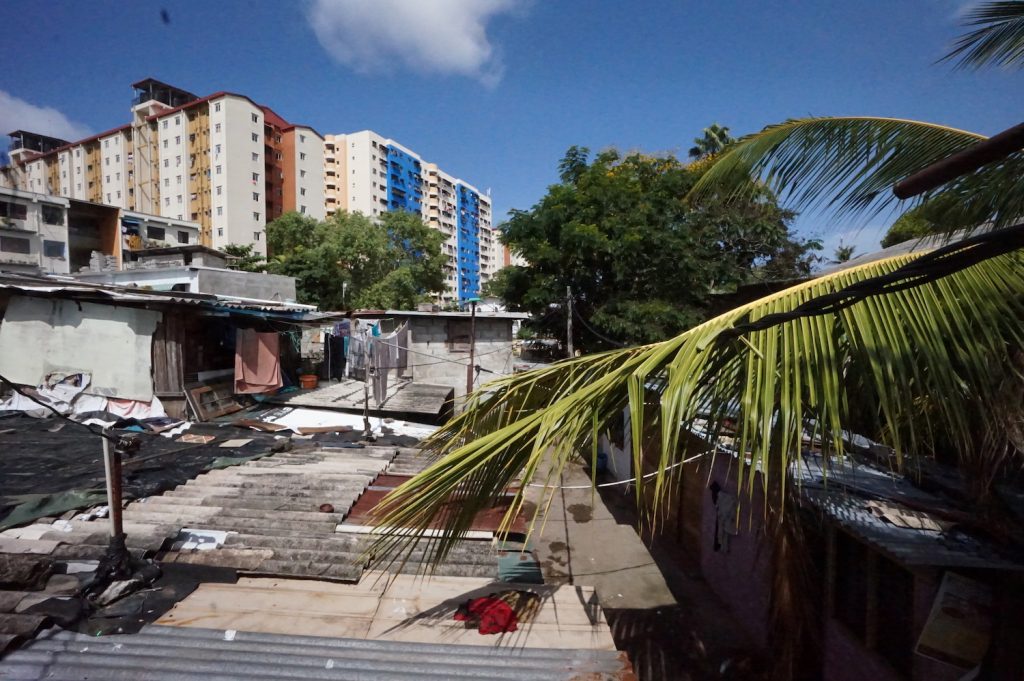
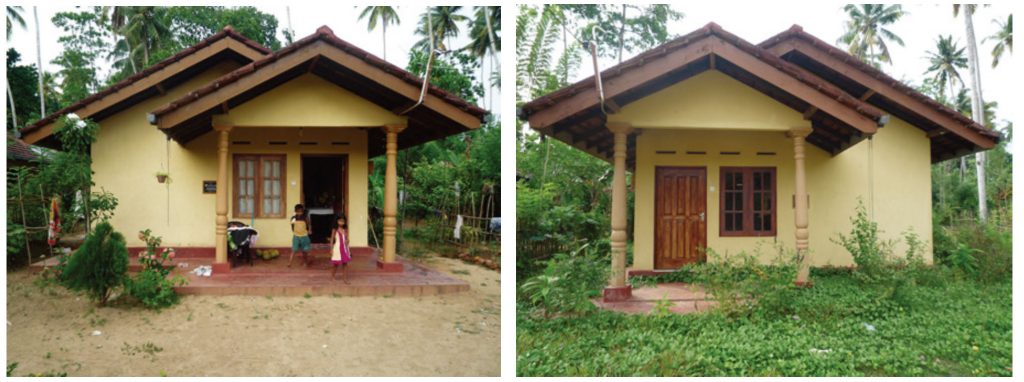
This study examines the interaction between social images and actual space in tenement houses, locally called line houses, on a tea plantation in Sri Lanka. The social image of line houses was analyzed based on the discourses of managers, supporters and residents, while tracing the history of tea plantations and its social development, and the physical characteristics and space of line houses were clarified following a field survey in a village, a former tea plantation in Kandy District. Line houses have been conventionally understood only in one aspect, as poor and inhuman living environments that need to be improved or eliminated. However, the results of this study show that the line houses have acquired a sense of place and inherited Tamil culture. This finding reinforces the recent discourse that attempts to reconsider the space of tea plantations from the perspective of the people who have lived there and may provide a basis for rethinking the government’s policy of resettling people on line houses.
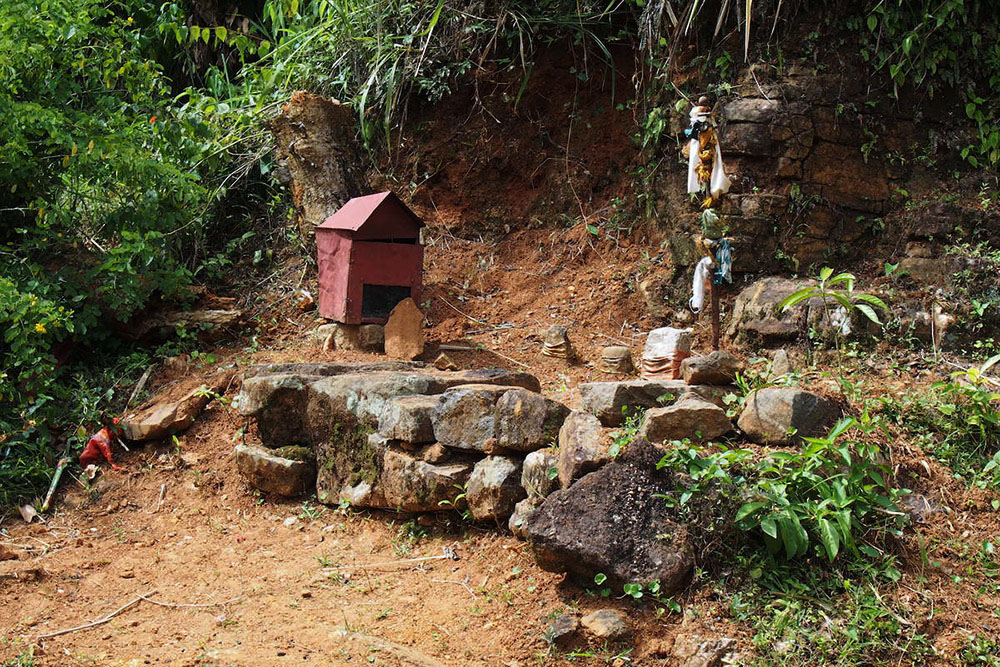
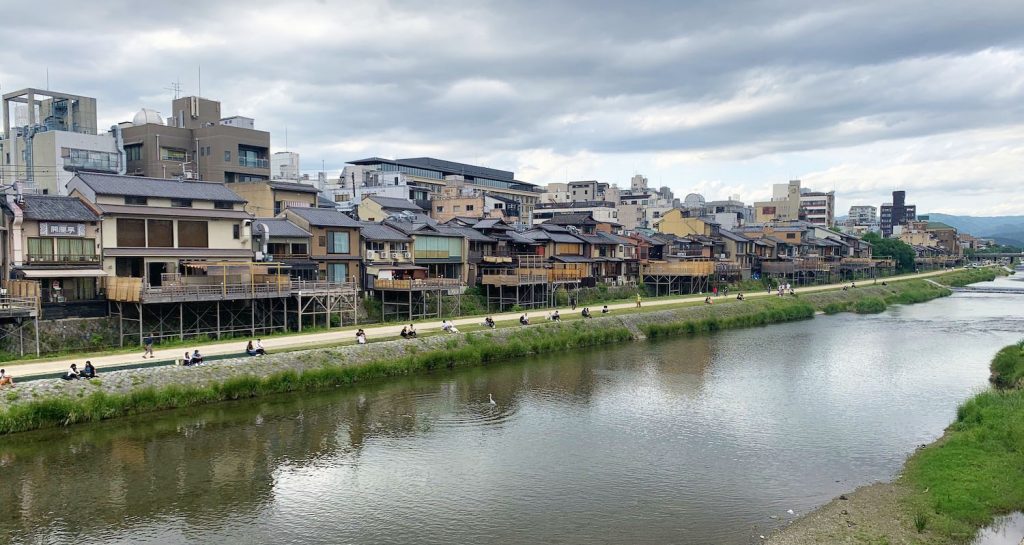
This paper attempts to understand the connection between people and local communities from the aspect of “faith” in the Jizo-bon in Kyoto, which has been attracting attention in recent years as a foundation for local community. At least in Kyoto, people of all religions and denominations participate in Jizo-bon, and the religious aspect of the event is not strongly considered by the participants. However, Jizo-bon is rooted in “faith” centering on the act of enshrining Jizo, and it is certain that this is why it has continued for so long. The origin of Jizo-bon is said to date back to the middle of the Edo period at the latest. Without an understanding of how people relate to each other, to the environment, and to the world in this historical lifestyle culture, evaluating Jizo-bon based on modern values alone may in fact jeopardize its continuation.
Acceptance and transformation of the housing “ladder” in slum resettlement projects in Colombo, Sri Lanka(Japan Architectural Review)
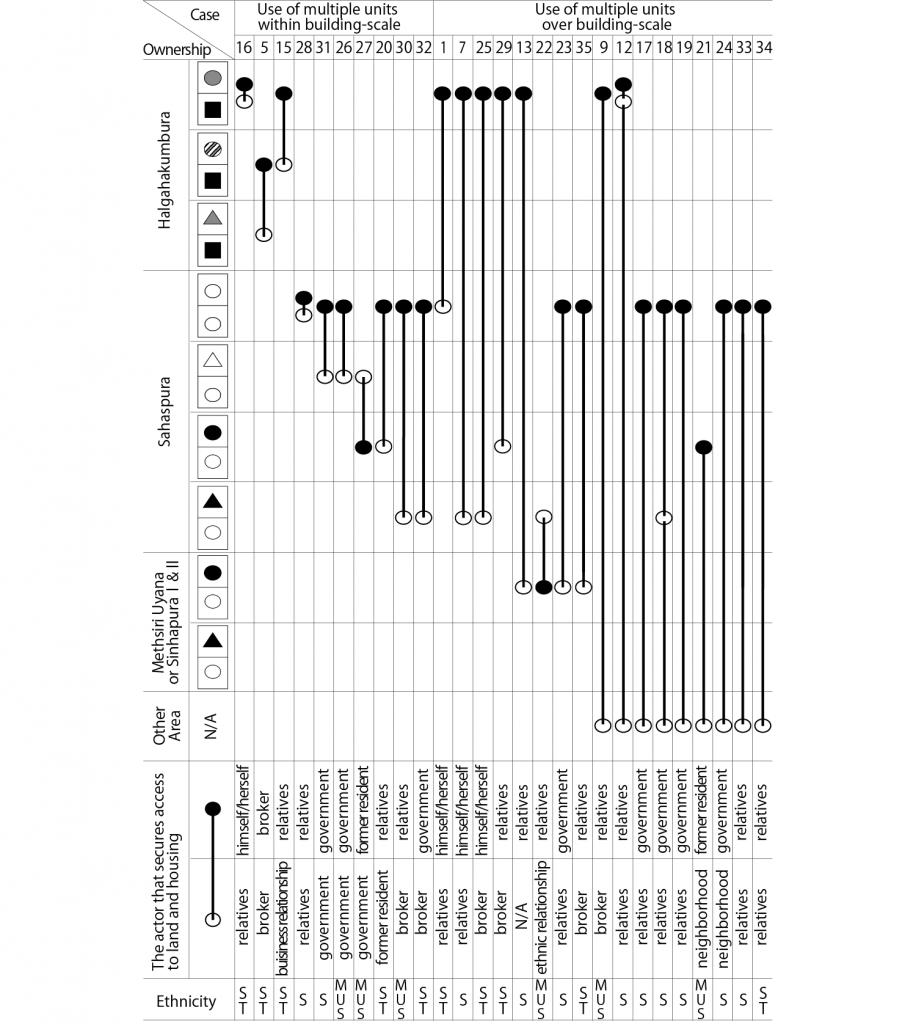
This study focuses on the Sustainable Township Development Programme, a slum resettlement project that represents a recent housing policy shift in Sri Lanka. Through the actual housing improvement activities of the residents of Sahaspura, a resettlement housing complex, and the slum residents in the surrounding area, the response of the beneficiaries to the housing “ladder” was clarified. Policy makers and planners intended to merge slum dwellers into the formal housing market through the provision of “ladders,” a set of regular ownership and dwelling units in Sahaspura. However, residents have responded in a variety of ways, including house extensions and renovations and informal housing transactions according to their daily needs.
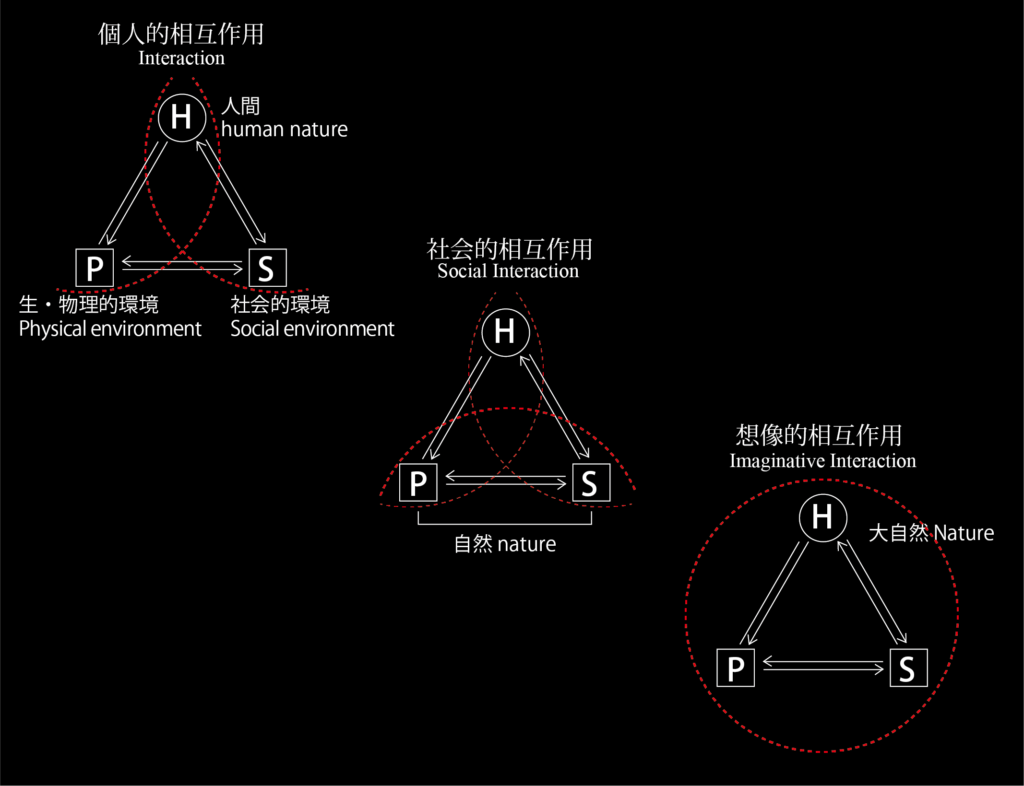
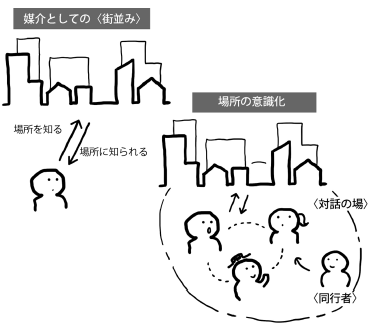
The city, as an accumulation of artifacts, has been endowed with a variety of meanings and values derived from the activities of the people who pass through it. Especially in a city with such a long history as Kyoto, the majority of the artificial environment surrounding our lives was created in the past by someone other than ourselves. Therefore, the meaning and value of the artificial environment is layered and laminated. However, in today’s society, we feel that the distance between people and their environment is becoming more and more distant in exchange for the increased convenience and comfort that comes with modernisation. If this is the case, how can we approach the meaning and value of the environment again, and regain a relationship that allows us to “interact” (=cooperate) with the environment, including non-human (objects)?
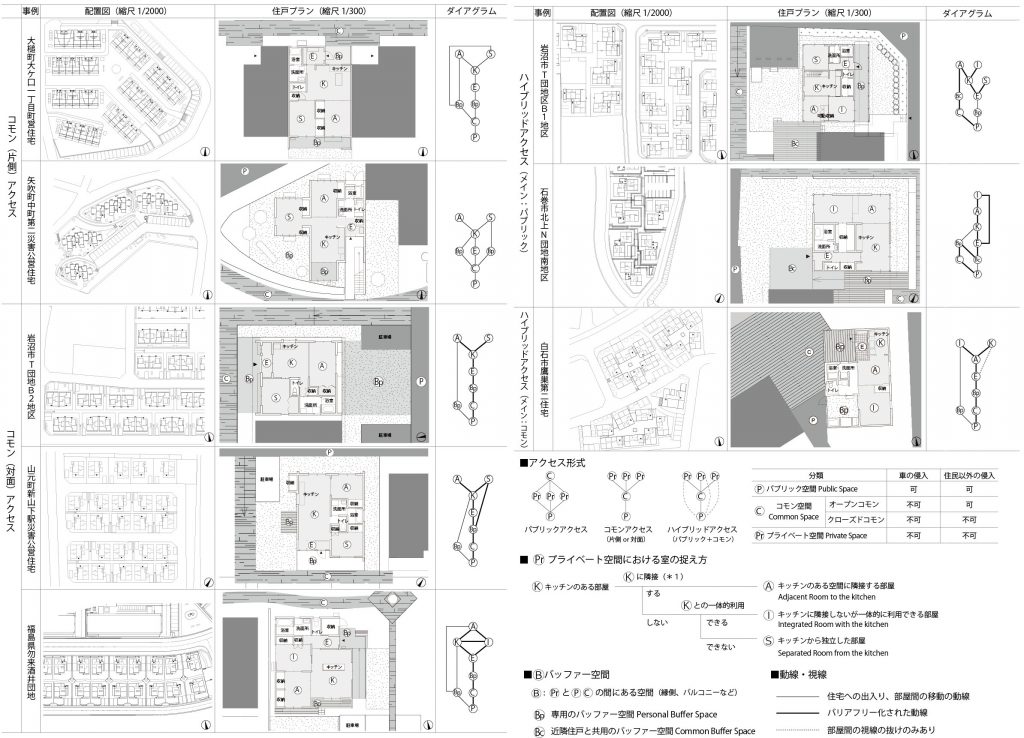
Among the terraced-type disaster public housing in the three prefectures affected by the Great East Japan Earthquake of 2011, we selected the housing complex that adopted the hybrid access, and show the actual situation of the recovery of the commonality of the inhabitants. We focused on the reflexivity that lifestyle affects the environment after reconstruction. We confirmed that the common space and the buffer space inside and outside the house are the keys to meet the needs of the inhabitants who want to interact while maintaining a certain sense of distance. In order for the introduction of the common space to function, we pointed out that in addition to the design and arrangement of the buffer space, it is important to stabilize the way of living by the arrangement and circulation of the space inside the house.
This paper focuses on the Sustainable Township Development Program (STP), an urban regeneration project that has been underway since the late 1990s in Colombo, Sri Lanka’s largest city, to examine how the relationship between people resettled from slums and the land is changing. In this paper, we focus on the link between people’s practices and the processes of “purification” and “translation” in modernization, as proposed by anthropologist Bruno Latour. Specifically, we will depict how people, confronted with the “ladder” of housing (legal land ownership, high-rise housing units) as a means of “purification”, reconfigure their relationships, including their relation to the land, as they try to adapt to their environment while being at the mercy of changing circumstances.
The coronavirus (COVID-19) problem is a complex problem that spans a wide range of fields including medicine (epidemiology, public health), risk science, informatics, sociology, history, urban planning, and architecture. We will consider the living environment in an emergency from the perspective of “if a disaster occurs under the circumstances of the spread of new corona infection”, and introduce related information resources and literature. I think it is important to acquire the attitude and method to continue to think about how to “rightly fear” the risks around us and “do our best” to deal with them. In that sense, what is essentially important may be the same as it was before the new Corona. I hope everyone will be a glove hint to face the current situation.
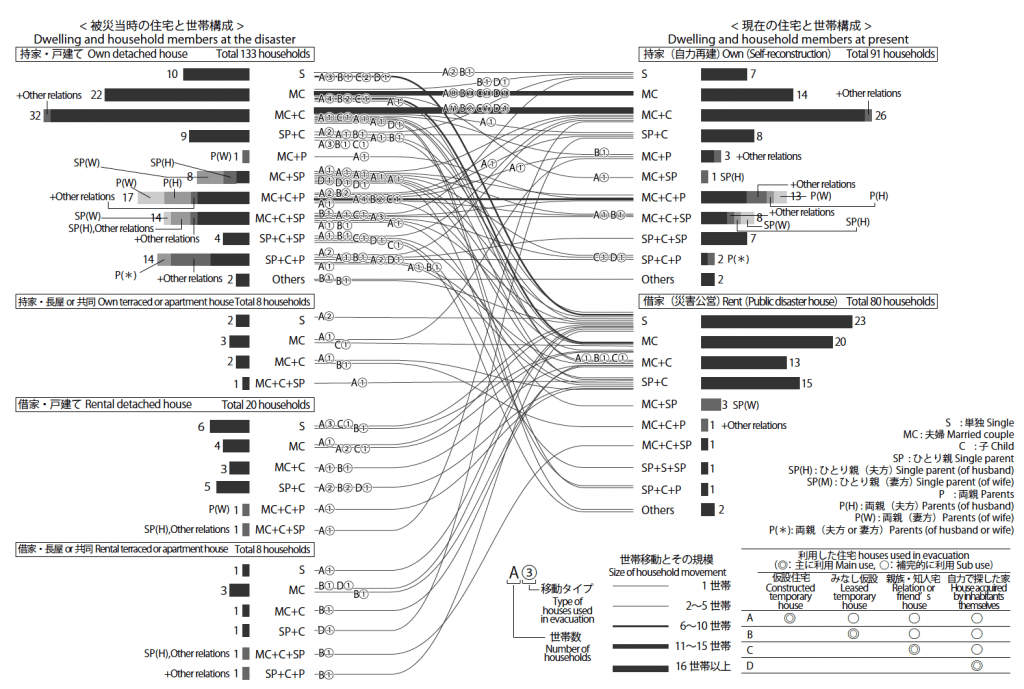
This paper analyzed characters of house and life reconstruction behavior by residents in Tamaura-West district which is the large-scale group resettlement site rapidly completed in the Great East Japan Earthquake of 2011. It is clarified that the household separation is advanced. However, the drastic change is mitigated with adjustment of way of living by the residents themselves. It is caused to characters of plan of the district (rapid reconstruction, mixture of house types, maintenance of previous neighborhood etc.). On the other hand, restriction by customs about family and restoration institution sometimes have negative affect on the activeness of the residents.
“What is the relationship between the disaster prevention map and Jizo’s shrine?”
This is a simple question from a participant, local residents when I conducted a workshop in an area I am currently helping disaster prevention community planning. From the viewpoint of the theme of this special feature, Accomodating, it is necessary to watch the city not only during normal times but also during emergencies. On the other hand, when we think about emergencies, you also need to use your imagination about the situation of the city during normal times. Such a perspective between normal times and emergency times is indispensable for creating a truly disaster-resistant local society. However, it is often that the link between normal and emergency, which was natural for me, is not for others. What I introduced at the beginning was a word from the inhabitants who made this fact noticeable to me. Let’s look at the theme given to me in this article, “Urban Accomodation Focused on Emergencies.”
This paper firstly summarizes the transition of tea plantations, focusing on the treatment of laborers’ dwelling and environment (line house) based on existing studies. Next, analyze the “design guidelines” (Planters Manual) that became the prototype of the standard plan for line houses. In addition, grasp the current situation of the residence of the line houses and compare it with the prototype. Finally, this paper explores mainly the physical aspect of the line houses, the Tamil people who have faced the situation at that time while being at the mercy of complicated history, and the image of residence of the line houses that have continued with them.
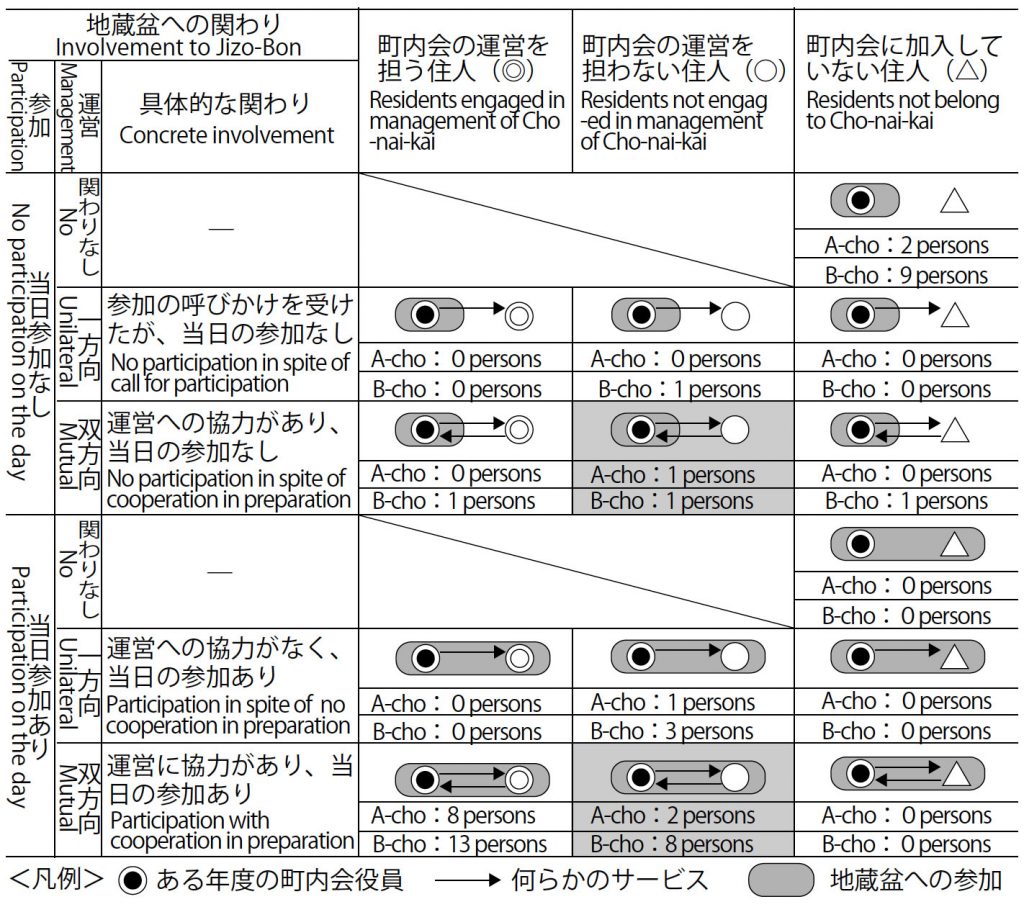
This paper analyzed how Jizo-Bon, small-scale religious festivals held widely in Kyoto-city, contributes for improving resilience of “cho”, the basic communities in the central urban area of Kyoto. We clarified that Jizo-Bon is one of important opportunities for inhabitants to be involved in “cho” except for “cho-nai-kai”, community management associations. The results show Jizo-Bon 1. Loads for management are distributed to the extent that each inhabitant can bear them. 2. Meaning of Jizo-Bon can be flexibly renewed corresponding with each inhabitant’s purpose or motivation for joining.
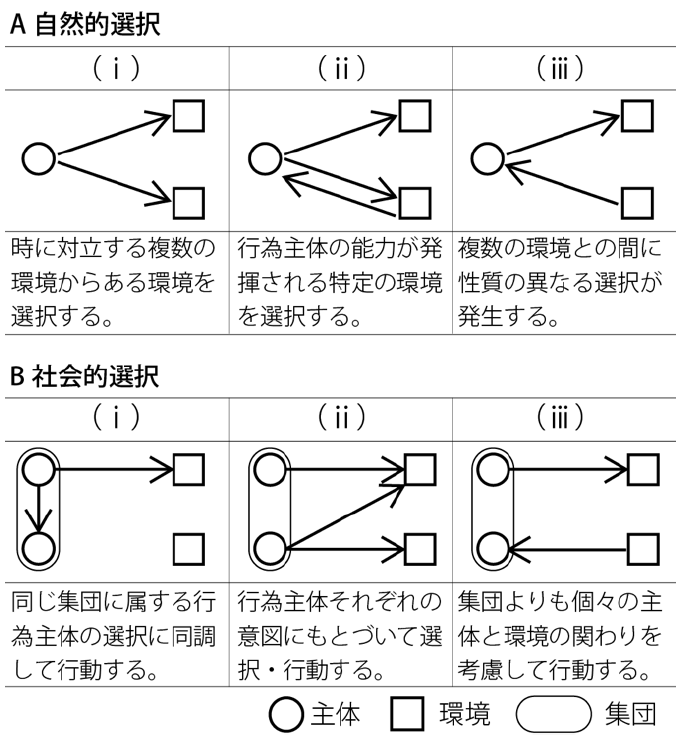
Social mobility and uncertainty surrounding local communities are increasing in the contemporary societies. “Resettlement society” means societies with social support for people who lost stable dwelling as unexpected reasons and intend to restore their stable conditions. Toward realization of the resettlement society, it is necessary to promote research and practice on dwelling design exploring equilibrium points beyond social conflicts and housing policy considering locality and dynamics of housing system.
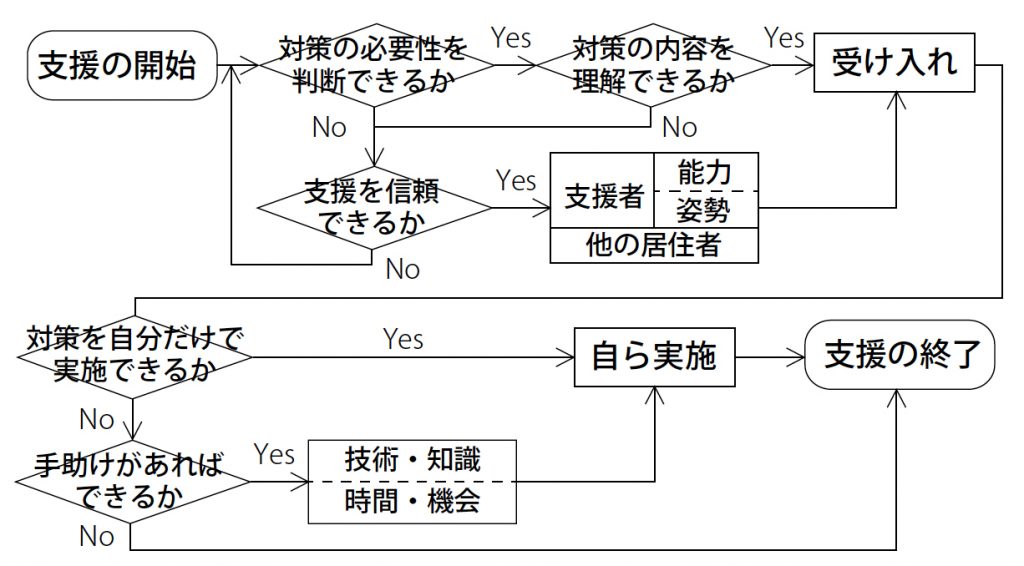
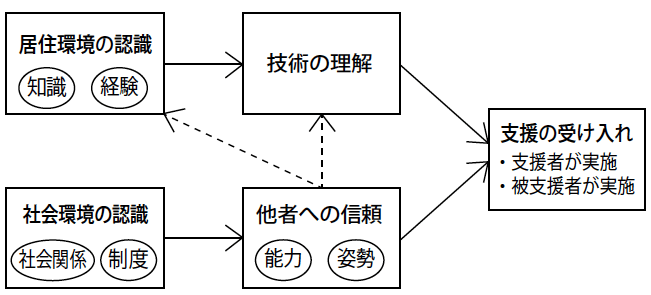
This paper examined the factors affecting residents’ acceptance of the support based on the action research on support for improvement of temporary house and environment after the Great East Japan Earthquake of 2011. Some residents accept because they understood the problems and technology with their knowledge or experience. However, other many residents couldn’t understand them enough and depend their decision on “trust” to others. When they build trust, their expectation for ability of supporters as experts is lower than attitude of supporters as volunteers and residents understand supports better after acceptance of them and are more actively involved through their continuous involvement.
Masahiro Maeda et.al : The effect of micro credit on life restoration and community formation in resettlement households affected by the tsunami
This paper analyzed the effect of micro credits in resettlement sites from the perspectives of the NGO staff and residents who participated in micro credit groups. The results are listed below. (i) Micro credits have economic effects for reconstructing life by providing loans for economic activities in resettlement sites in which economic activities are difficult due to the geographical and spatial features. (ii) Micro credits have social effects on community formations through micro credit activity and reorganizing household relationships in resettlement sites. NGO staff and residents organized micro credit groups through neighborhood and family/relative relationships, which succeeded from a previous settlement. Moreover, they created new relationships in addition to these existing relationships. (iii) These results show that micro credits may be a method for sustainable residence in resettlement sites that arise after natural disasters.
This paper examined actual condition of management of Jizo-bon in the central area of Kyoto-city and analyzed component of participants of Jizo-bon. As the result, we clarified people (ex. apartment residents) who tend to be unfamiliar with community activities also join in Jizo-bon. This result means that Jizo-bon play a role in the creation of a resilient community in terms of improving the “diversity” of community members which is one of the basic characteristics of resilient communities. In addition, we considered about the reason why Jizo-bon play a rore described as above. We pointed out that Jizo-bon has “flexibility” from view of selectivity of events, number of participants and place corresponded to the situation of each communities. These results suggest that community resources like Jizo-bon which has experienced change in the long time and succeeded as “the core” of community is meaningful in local community management in the era of uncertainty.
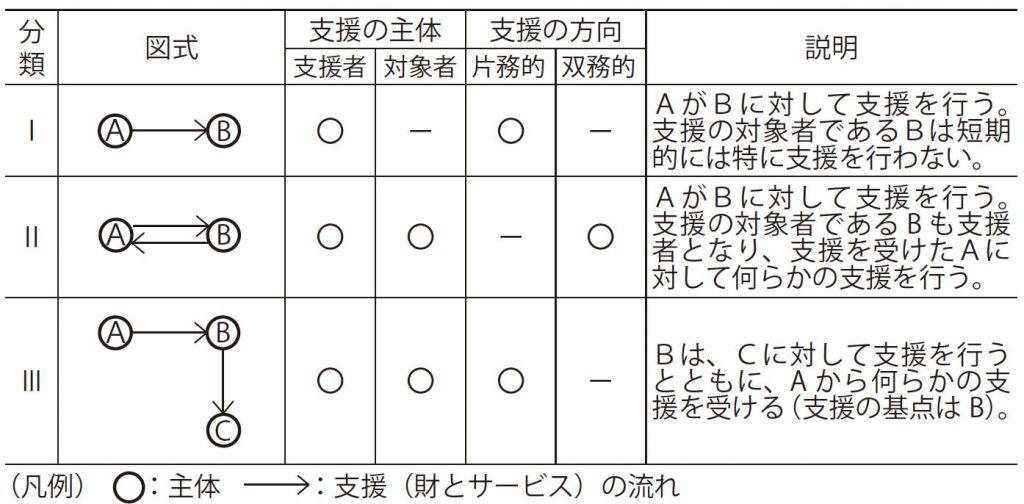
We have conducted an action research on improvement of residential environment in temporary housing after the Great East Japan Earthquake of 2011 through the case of Motoyoshi, Kesennuma-city. This paper tried to clarify the factors why we could realize the support for residents of temporary housing although we had only limited resource and weak relationship with local actors or other supporters before the disaster. We analyzed realization process of our support from the view of “indirect support” (support for supporters) and the results are shown as follows. 1. “Indirect support” which doesn’t fix the relationship between supplier and recipient of support is efficient. The support is realized by the relationships which are created among supporters or between supporters and residents after the disasters. 2. Improvement planning of residential environment based on appropriate technology (preparation for hot and cold climate) is important. The planning should be acceptable for not only individual residents but for residents’ community and other supporters.
This study explored support method for victims of the Great East Japan Earthquake of 2011 based on experience of support activity for improvement of housing environment in temporary houses and examined reasons which realized the activity despite of limited resources. 1) Relationships of “support for supporters” was created based on sharing aid information among various support actors in the process of exploring correspondence to problems which cannot be solved by each actors. 2) “Trust” for others (supporters/other residents) are fostered and utilized in the process of decision-making under the uncertain situation.
In order to regenerate a housing complex, it is general situation that the project is driven by private developers. However, in the case of regeneration in urban area, cooperation between regeneration and community management is more important compared with regeneration in suburban area. This paper intends to find possibilities of “Machizukuri company” in regeneration of “Horikawa Housing Complex” which is the oldest RC housing complex with shops and dwellings in Japan. We analyzed discussion in “the Committee of Horikawa Machizukuri Company” which is composed by members from various speciality and background and interviewed the members about their sense of values and possible scheme to realize Machizukuri Company. As a result, we classifi ed “Machizukuri company” to 4 types by the roles (driver or coordinator) and initiatives (private sector driven or citizen driven). We also pointed out the appropriate schemes realizing each of the types by ownership of land and buildings and relationships between Machizukuri Company and administrative, private developers, the residents and citizen.
This paper analyzed effect of Micro Credit in Resettlement Site with research of NGO staff and residents who belong to Micro Credit group. The results are as follows. (1) Micro Credit has economic effect in terms of life reconstruction through loan supply for economic activities in Resettlement Site where economic activities are difficult due to geographical and spatial features of Resettlement Site. (2) Micro Credit has social effect in terms of community formation through Micro Credit activity and re-organization of household relationships in Resettlement Site. NGO staff and residents organized Micro Credit group by using Neighborhood relationship and Blood relationship which were succeeded from previous settlement. And they also created new relationships which are across these existing relationships. (3) These results show possibility of Micro Credit as a method for sustainable residence in resettlement site design after natural disasters.